Creative Uses of Transparent Business Cards in Marketing

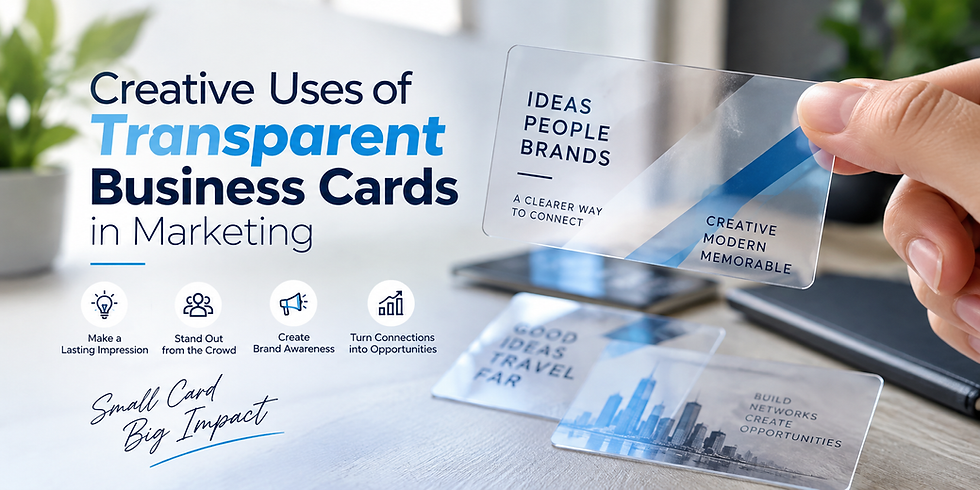
Business cards remain a common tool for professional introductions, even as digital contact sharing has become widespread. Among the card formats available today, transparent business cards have gained attention from companies that want their printed materials to look different from standard paper stock. This article looks at what these cards are, why businesses use them, and how the format is applied in different marketing settings.
What Are Transparent Business Cards
The cards are printed on clear or frosted plastic instead of paper. Light passes through the material, giving the finished piece a distinct appearance compared to matte or glossy paper cards. Because the base material is plastic rather than paper, the format is also known as transparent plastic business cards or translucent plastic business cards, depending on how much clarity the printed card retains.
Most manufacturers use polyvinyl chloride (PVC) or a similar plastic substrate. Ink is applied directly to the plastic, often with a white layer beneath it so that text and graphics stay visible against the clear background. Some designs leave large sections of the card completely see-through, while others rely on a frosted or tinted base for a softer effect.
Why Businesses Choose This Format
A few practical factors lead companies to select plastic over paper for their cards.
Visual Distinction
A card printed on clear plastic looks different from the paper cards most people collect at networking events. That difference can make a card easier to recall later, since it does not resemble the bulk of paper cards a person might receive over time.
Durability
Plastic resists bending, tearing, and water damage better than paper. A card that survives months in a wallet or bag is more likely to remain legible when it is finally referenced.
Design Flexibility
Clear plastic allows layered design effects that paper cannot support. Designers can place text on one side and graphics on the other, using the material's transparency to suggest depth. Spot color printing, foil accents, and frosted sections can all appear on a single card.
Creative Marketing Applications
Companies across several industries apply this card format in ways suited to their audience.
Retail and Hospitality
Retail brands sometimes issue transparent plastic business cards that double as loyalty or membership passes. The clear material allows a logo to appear to float on the card surface, which some retailers use to support a clean, modern brand image. Restaurants and small shops have also used these cards as gift card alternatives, since plastic holds up to repeated handling better than paper.
Technology and Startups
Technology companies often choose transparent business cards to signal an association with modern design. A card that pairs clear plastic with minimal text can communicate a brand's focus on simplicity. Some firms print only a company name and a QR code on an otherwise blank, see-through card, sending recipients to a digital profile rather than listing full contact details on the card itself.
Creative Industries
Photographers, designers, and architects often use translucent plastic business cards as an extension of their portfolio work. A photographer might print a faint image across the card so it becomes visible when held up to light. Architects sometimes choose the transparent material to reference glass and structural design, tying the card format to the nature of their work.
Design Considerations
Designing an effective card in this format requires attention to a few factors that do not apply to paper.
Contrast and Legibility
Because the background is clear rather than white, text and logos need enough contrast to stay readable. Many printers apply a white ink layer beneath colored ink so the design does not blend into whatever surface sits behind the card when it is viewed.
Placement of Clear Areas
Designers must decide which sections of the card stay fully clear and which carry a printed design. A card that is too heavily printed loses the visual effect of transparency, while one that is too sparse may not communicate enough information.
Thickness and Finish
Plastic cards come in different thicknesses and finishes, including glossy, matte, and frosted options. The choice affects both the feel of the card and how much detail can be printed clearly on its surface.
Durability and Printing Technology
Producing transparent business cards relies on printing methods suited to plastic, such as offset printing or digital printing designed for plastic substrates. These methods allow fine detail and accurate color on a surface that behaves differently from paper during production. Companies such as Perfect Plastic Cards offer custom printing for clear and frosted plastic cards, including spot UV coating, foil stamping, and custom die-cut shapes for businesses that want a specific design outcome.
Because plastic resists moisture and general wear better than paper, cards made from it tend to stay usable longer. This durability is often cited as a reason businesses choose plastic for trade shows, conferences, and other settings where cards change hands in volume and may not be reviewed until weeks later.
Comparing the Format to Traditional Paper Cards
Paper cards remain the most common format, largely due to the range of stocks and finishing options available at general print shops. Plastic cards, by contrast, require equipment and processes that are less widely available, which can affect production timelines.
In terms of physical traits, paper cards are lighter and easier to write on by hand, while plastic cards resist bending and water exposure better. The choice between formats often depends on how the card will be used and the impression a business wants to leave with the person receiving it.
Choosing a Provider
Businesses considering this format typically look at print quality, available finishes, and turnaround time when comparing providers. Because plastic printing differs from standard paper printing, working with a provider experienced in plastic card production can affect the final result.
Requesting a sample or a proof before a full print run is a common step, allowing a business to confirm colors, text placement, and clarity levels before cards go into full production.
Conclusion
Transparent business cards give businesses an alternative to standard paper cards for presenting contact information in physical form. Their use spans retail loyalty programs, technology branding, and portfolio pieces for photographers and architects alike. As with any printed material, the result depends on careful design choices around contrast, layout, and finish, along with a printing provider capable of producing consistent results on plastic.


Comments